Introduction
The ABox is the part of an ontology that contains the actual data instances (specific facts) that are tagged using the TBox (terminology box). It’s like the "data" section of an ontology that uses the "rules" defined in the TBox.
Overview
The ABox (Assertion Box) is a fundamental component of ontologies that contains the actual data instances or assertions that are tagged using the TBox (Terminology Box). While the TBox defines the structure and rules of the ontology (classes, properties, and their relationships), the ABox contains the specific instances of these classes and their relationships.
In the context of digital engineering and semantic web technologies, the ABox plays a critical role in enabling interoperability and computational reasoning across different engineering models and tools. It’s the part of the ontology that actually holds the data being used for analysis, decision-making, and integration.
|
The ABox is where the "real world" data gets connected to the formal structure defined in the TBox. Without the ABox, the TBox would just be a theoretical framework with no practical application. |
|
In the DEFII framework, the ABox is where the actual engineering data (e.g., system parameters, analysis results) is stored in a format that can be reasoned about using the ontological structure defined in the TBox. |
Position in Knowledge Hierarchy
Broader concepts: - Ontology (part-of)
Details
ABox vs. TBox
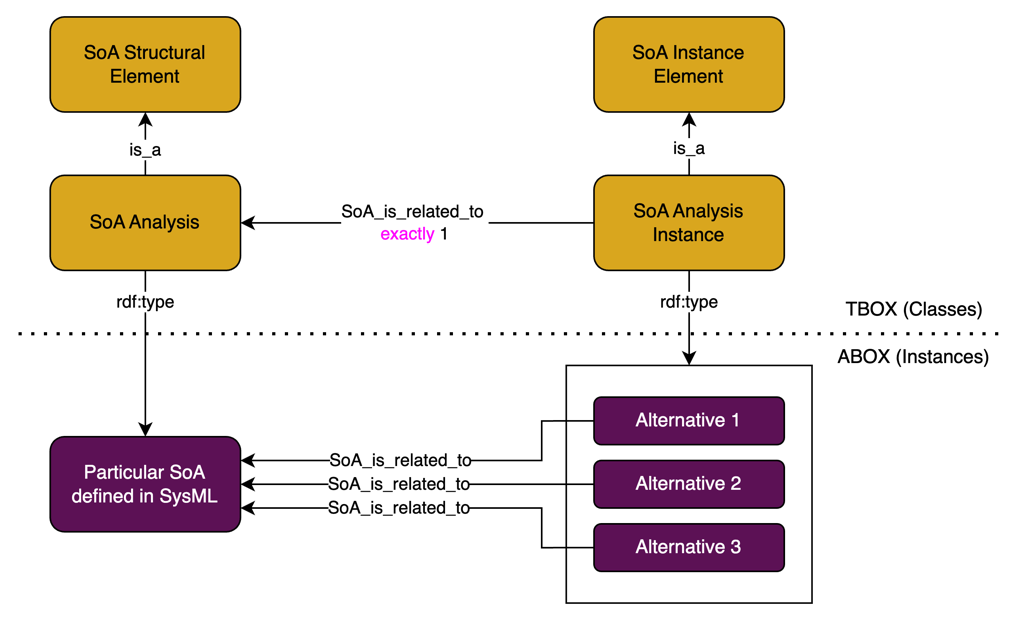
The ABox and TBox are complementary components of an ontology. The TBox defines the vocabulary and structure of the domain, while the ABox contains the actual data instances that use that vocabulary.
| Component | Role | Content | Example | |===========|======|=========|=========| | TBox | Terminology Box | Defines classes, properties, and their relationships | "Vehicle" is a subclass of "Object", "hasEngine" is a property of "Vehicle" | | ABox | Assertion Box | Contains specific data instances and their relationships | "Toyota Camry" is an instance of "Vehicle", "Toyota Camry" hasEngine "V6 Engine" |
|
The TBox is reusable across multiple applications, while the ABox is specific to a particular dataset or application context. |
ABox in the Semantic Web Stack
In the semantic web technology stack, the ABox represents the data layer that is aligned with the ontology defined in the TBox. This alignment allows for automated reasoning and querying using tools like SPARQL and reasoners.
The ABox contains RDF triples (subject-predicate-object) that represent assertions about specific instances:
<Toyota_Camry> <hasEngine> <V6_Engine>Where:
- Toyota_Camry is the subject (an instance of Vehicle)
- hasEngine is the predicate (a property defined in the TBox)
- V6_Engine is the object (another instance)
|
The ABox must be carefully constructed to ensure it aligns with the TBox definitions. Inconsistent data in the ABox can lead to incorrect reasoning results, which is particularly critical in engineering contexts where decisions are based on these inferences. |
ABox in Digital Engineering
In the context of Digital Engineering (DE) and the DEFII framework, the ABox plays a crucial role in enabling interoperability across different engineering models. The ABox contains the actual engineering data that is aligned with the ontology, allowing for:
-
Cross-domain data integration
-
Automated reasoning about system properties
-
Consistent interpretation of data across different tools
-
Traceability of data through the digital thread
For example, in the Catapult use case, the ABox would contain specific instances like: - "Catapult_001" with "armLength" = "2.5 meters" - "Catapult_001" with "launchAngle" = "45 degrees"
These instances are linked to the ontology defined in the TBox, which specifies that "armLength" is a property of "Catapult" and "launchAngle" is a property of "Catapult" with specific constraints.
Practical applications and examples
ABox in the IoIF Workflow
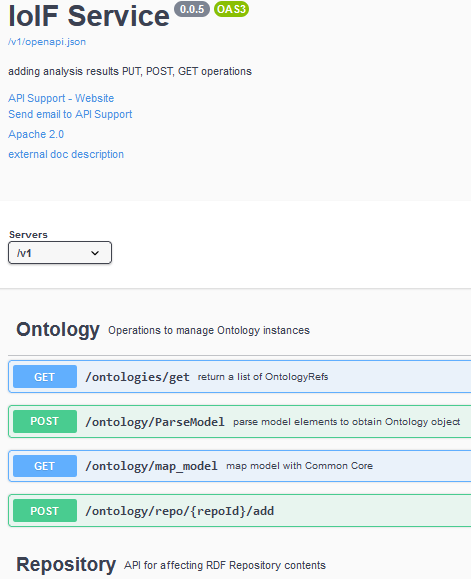
In the Armaments Interoperability and Integration Framework (IoIF), the ABox is where the actual engineering data from various tools is stored in a standardized, ontology-aligned format. The IoIF workflow involves:
-
Pulling data from engineering tools into the ABox
-
Using the TBox to define the ontology structure
-
Performing automated reasoning on the ABox data
-
Pushing results back to engineering tools
|
The IoIF framework uses the ABox to enable the "Digital Thread" by maintaining a consistent, ontology-aligned representation of data throughout the engineering lifecycle. |
Here’s a simple example of how the ABox would be populated in the Catapult use case using the RDF format:
@prefix : <http://example.org/catapult#> .
@prefix owl: <http://www.w3.org/2002/07/owl#> .
@prefix rdfs: <http://www.w3.org/2000/01/rdf-schema#> .

:Catapult_001 a :Catapult ;
    :hasArmLength "2.5"^^xsd:float ;
    :hasLaunchAngle "45"^^xsd:float ;
    :hasProjectileMass "5.0"^^xsd:float .

:Catapult_002 a :Catapult ;
    :hasArmLength "2.7"^^xsd:float ;
    :hasLaunchAngle "40"^^xsd:float ;
    :hasProjectileMass "5.2"^^xsd:float .
This example shows two instances of catapults (Catapult_001 and Catapult_002) with their specific properties stored in the ABox. The properties are defined in the TBox, and the instances are tagged with the appropriate ontology classes.
ABox Verification
In the Digital Engineering context, verifying the ABox is critical to ensure data quality and consistency. The IoIF framework provides tools for verifying the ABox against the TBox definitions to ensure:
-
All instances conform to the defined classes
-
All properties are correctly applied
-
Constraints defined in the TBox are satisfied
For example, the TBox might define that "launchAngle" must be between 0 and 90 degrees. The ABox verification process would check that all instances of catapults have valid launch angles.
|
The ABox verification process is essential for ensuring the reliability of the digital thread and the quality of engineering decisions based on the ontology-aligned data. |
Related wiki pages
References
Knowledge Graph
Visualize the relationships between ABox and other ontology components
Associated Diagrams