Introduction
A Value Property in SysML represents a parameter or attribute with a specific value, typically used in parametric diagrams to define constraints and relationships between system elements. It serves as the fundamental unit for representing measurable quantities in digital engineering models.
Overview
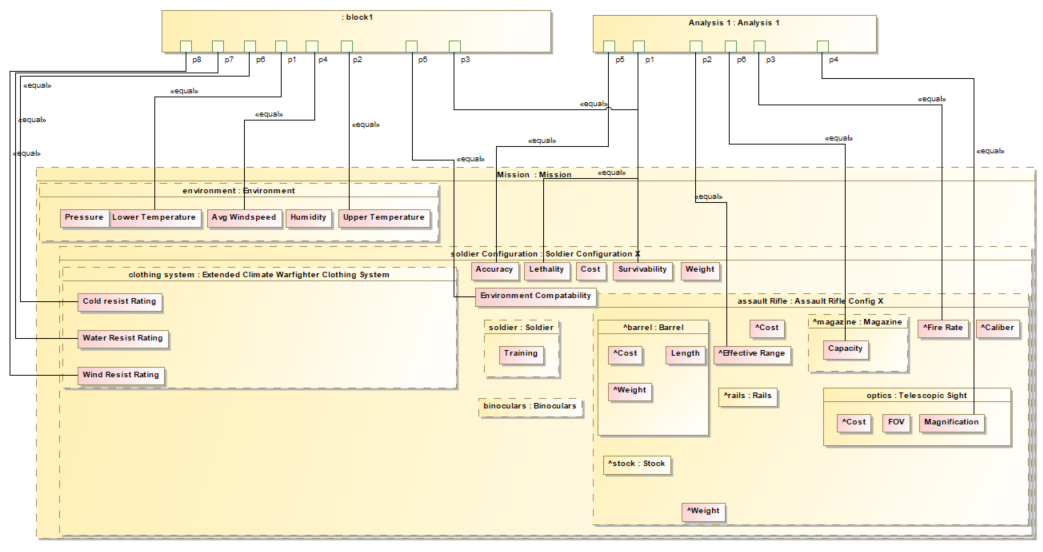
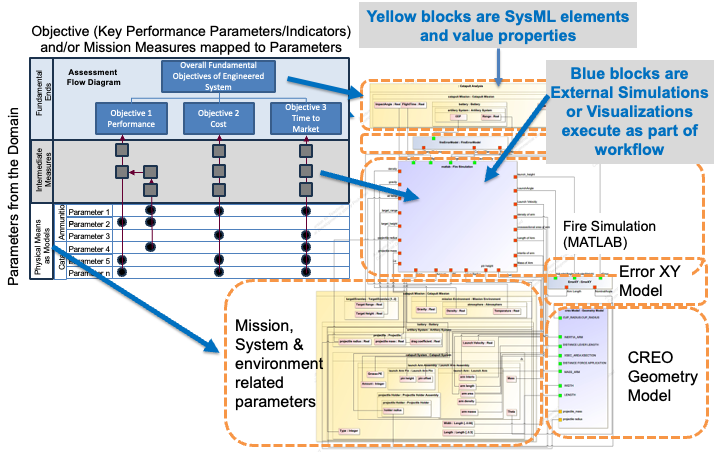
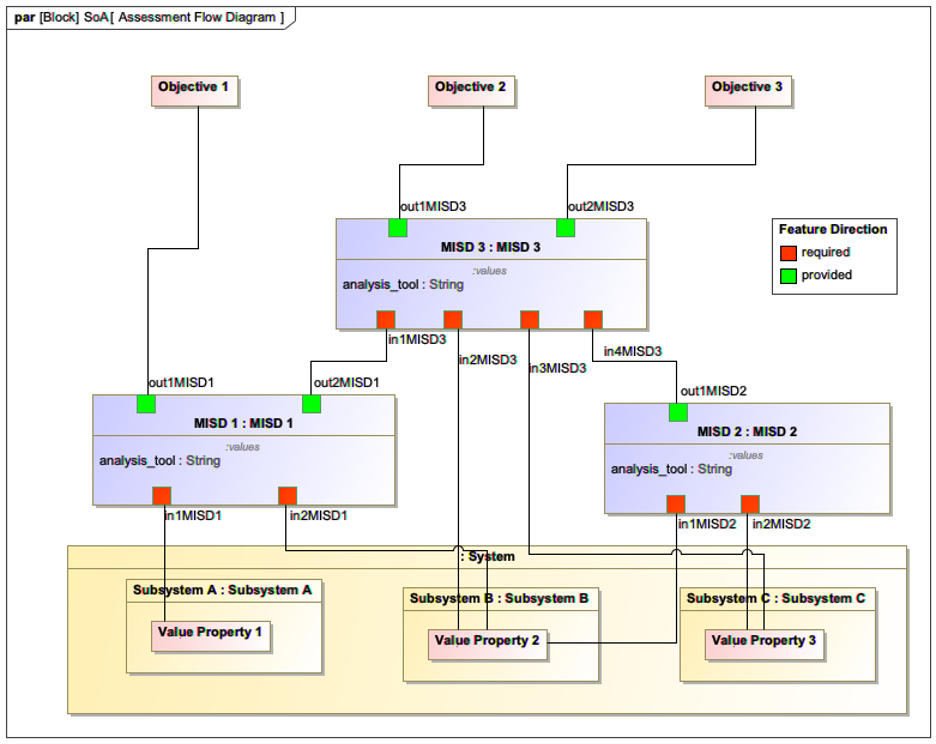
Value Properties are a core element in SysML modeling, specifically used within Parametric Diagrams to define constraints and relationships between system elements. In the context of Assessment Flow Diagrams (AFDs), Value Properties represent the flow of parameters between the system under analysis and external analysis models.
Value Properties enable: - Defining inputs and outputs for external simulation tools - Connecting system parameters to mission-level objectives - Creating constraint-based relationships for trade space analysis - Supporting ontology alignment through stereotype tagging
|
Value Properties are distinct from Part Properties (which represent structural relationships) and are used specifically for quantitative or qualitative parameter values that flow through the system. |
Position in Knowledge Hierarchy
Broader concepts: - Parametric Diagram (is-a)
Details
Value Properties are defined as follows in SysML:
-
Definition: A Value Property represents a single value or a set of values that can be used to constrain other elements in the model
-
Role in AFD: Value Properties serve as the "data pipes" connecting different analysis models in the Assessment Flow Diagram
-
Visual Representation: In SysML diagrams, Value Properties are shown as properties with specific values or constraints
-
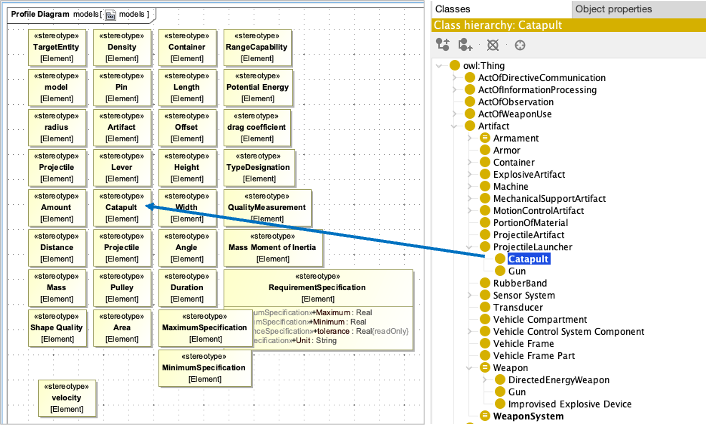
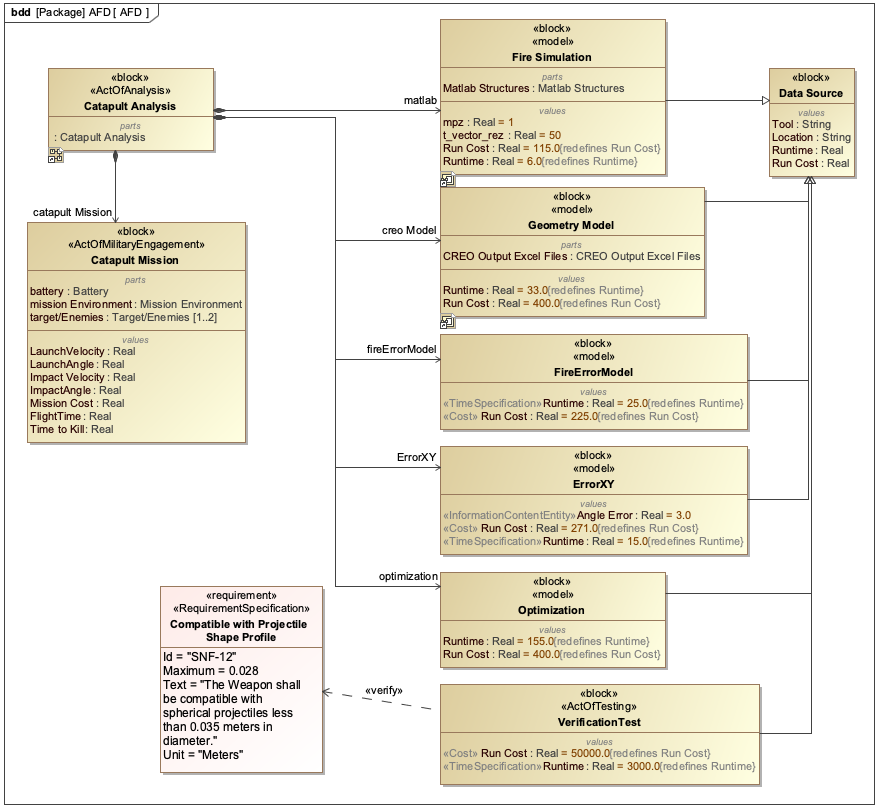
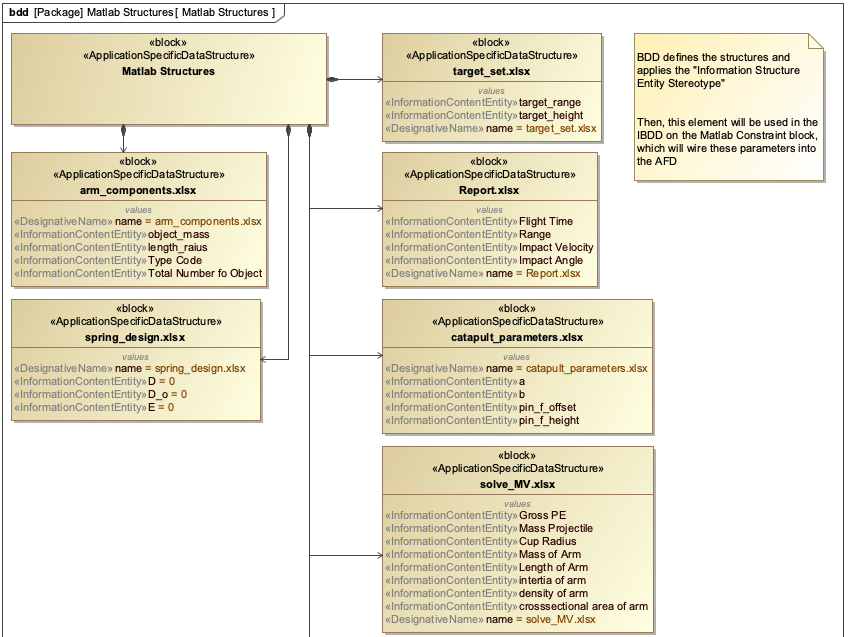
Stereotype Usage: Value Properties can be tagged with stereotypes to align with ontologies (e.g., [InformationContentEntity])
|
Value Properties are essential for creating computationally enabled models that can be processed by frameworks like IoIF. Without properly defined Value Properties, the AFD cannot correctly represent the flow of information between analysis models. |
Value Property Characteristics
Characteristic |
Description |
Example in Catapult Model |
Data Type |
Can represent numerical values, strings, or other data types |
Length (meters), Mass (kg) |
Directionality |
Indicates whether the property is an input or output |
Input to geometry model: Arm Length |
Ontology Alignment |
Can be tagged with stereotypes for ontology mapping |
|
Constraint Role |
Used to define constraints in parametric diagrams |
Max Range ≥ 4 meters |
Visualization Color |
Indicates role in workflow |
Input: Yellow, Output: Green |
|
When defining Value Properties, ensure they are: 1. Clearly named for readability (e.g., "Arm Length" instead of "AL") 2. Associated with appropriate units (e.g., "meters" for length) 3. Linked to relevant requirements through the Satisfies relationship |
Practical applications and examples
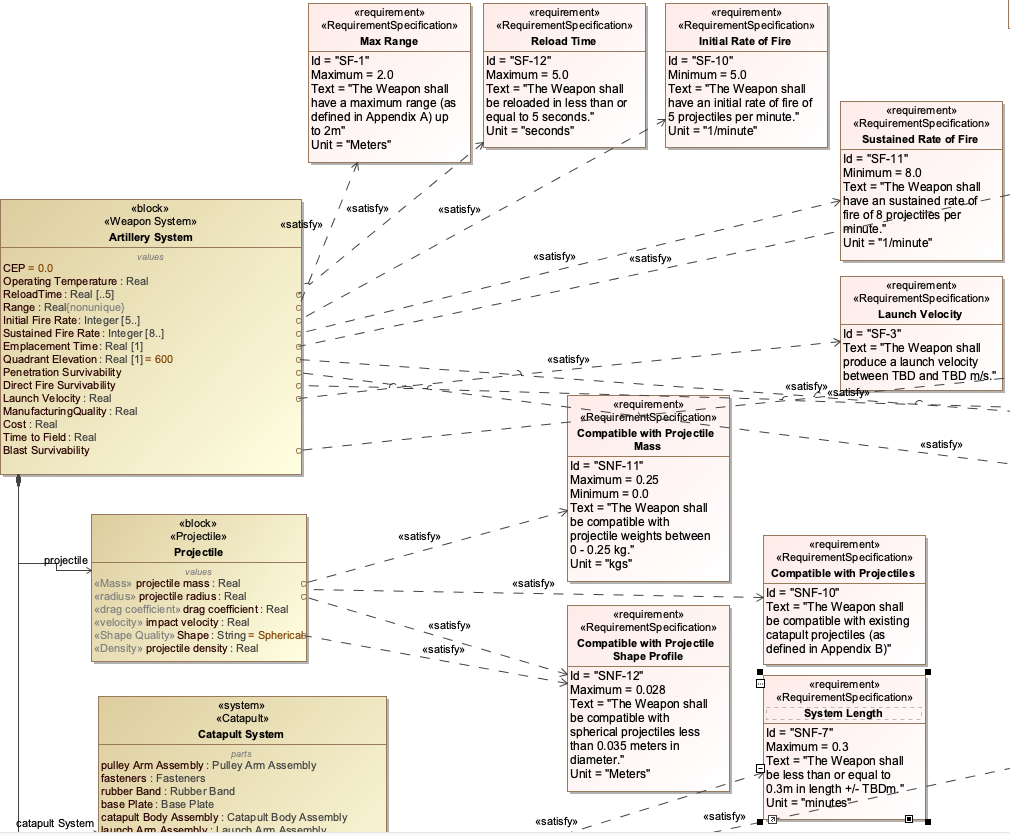
Catapult System Value Properties
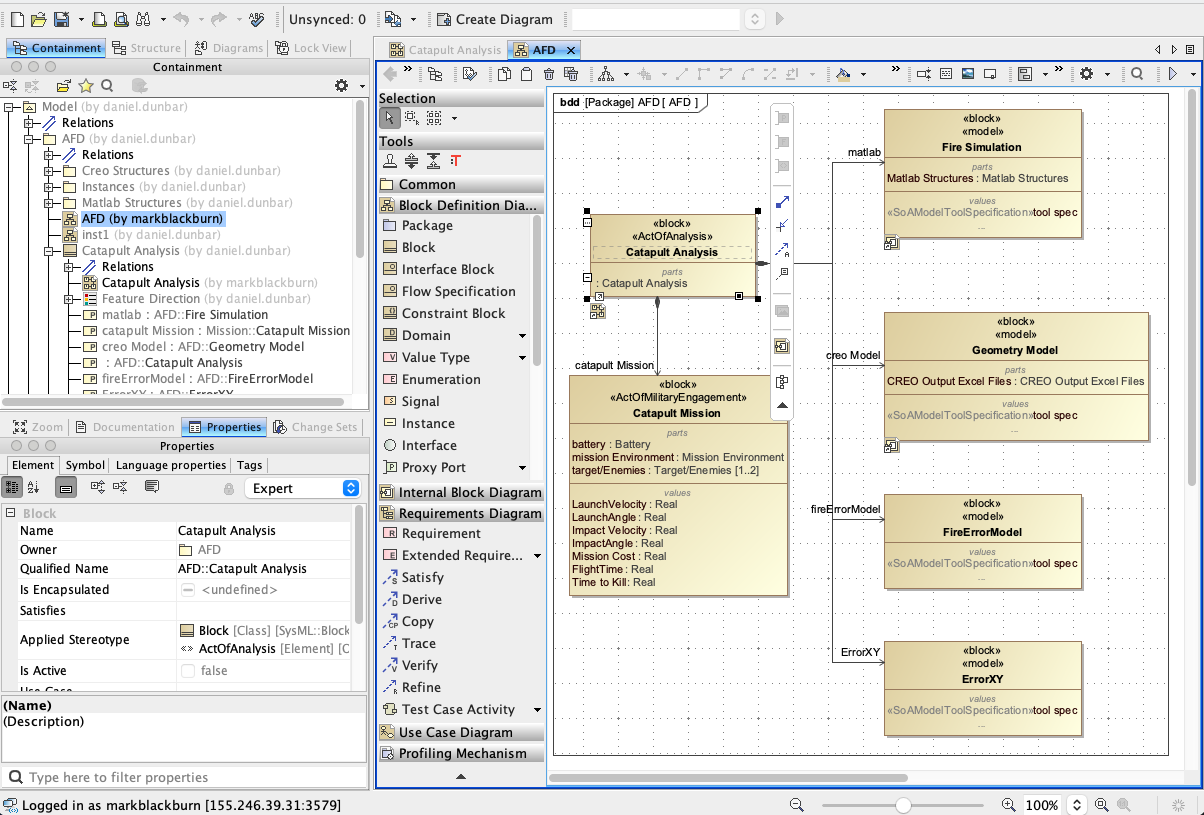
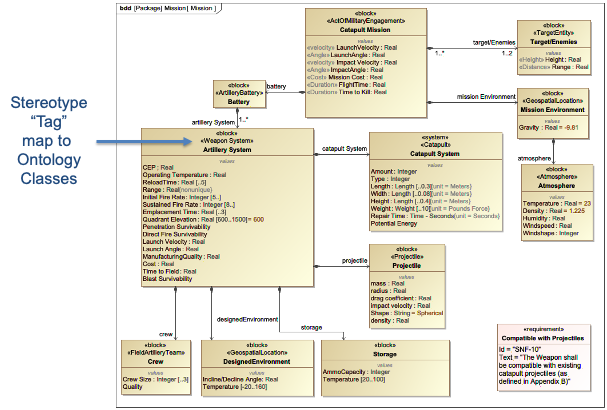
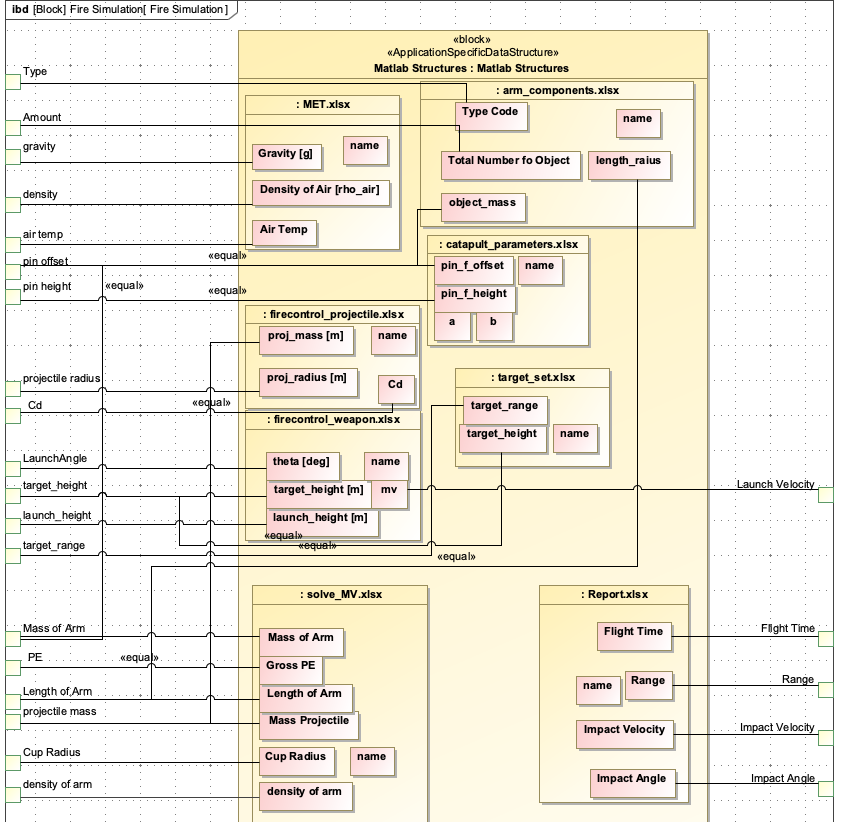
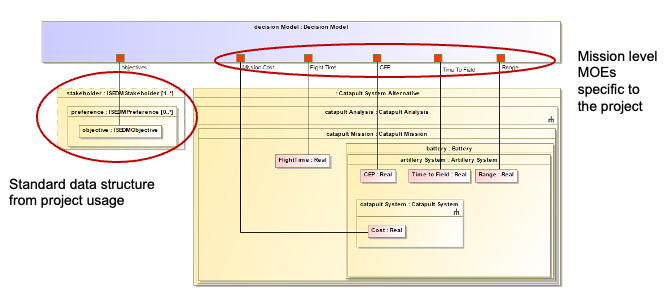
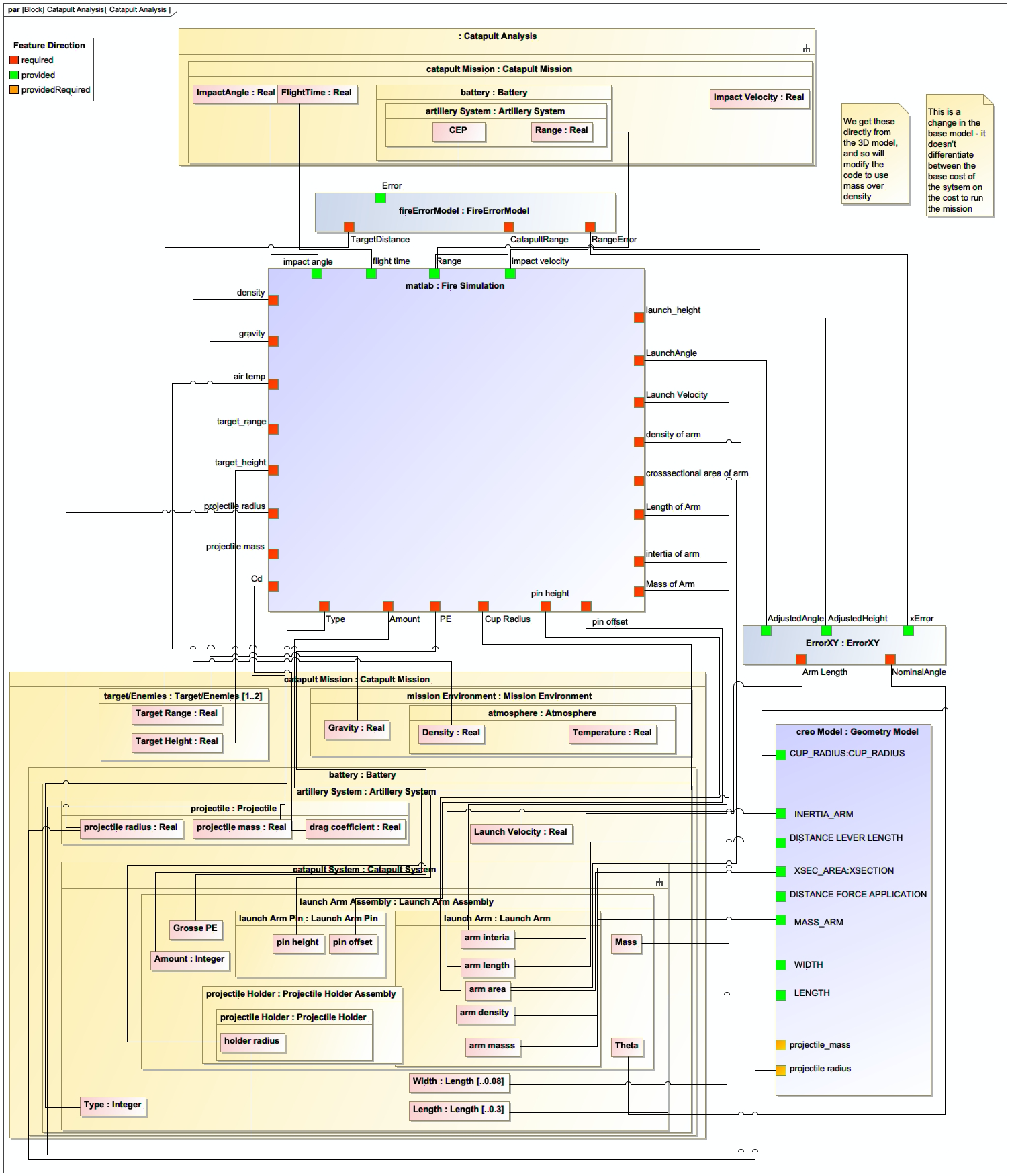
The Catapult case study demonstrates how Value Properties function in an Assessment Flow Diagram. Value Properties represent the parameters that flow between the system under analysis and the external analysis models.
|
In the Catapult example, the "Max Range" Value Property is the mission objective that connects the analysis results to the system requirement. |
Value Property Implementation in SysML
Here’s how Value Properties are implemented in a SysML model:
= Pseudo-code for defining Value Properties in SysML
catapult = Block("Catapult")
arm_length = ValueProperty("Arm Length", type="Length", value="2.5 m")
projectile_mass = ValueProperty("Projectile Mass", type="Mass", value="0.5 kg")

= Define constraint for mission objective
max_range = ValueProperty("Max Range", type="Length", value="4.0 m")
constraint = Constraint("Range Constraint", expression="Range >= Max Range")|
When implementing Value Properties, use descriptive names and consistent units to ensure clarity and interoperability across the digital engineering ecosystem. |
Ontology Alignment with Value Properties
Value Properties are aligned with ontologies through stereotype tagging, which enables semantic interoperability:
= Example of Value Property with ontology alignment
arm_length = ValueProperty(
    name="Arm Length",
    type="Length",
    stereotype="<<InformationContentEntity>>",
    ontology_class="http://example.org/catapult#ArmLength"
)|
The stereotype [InformationContentEntity] is used to indicate that this Value Property represents data that can be exchanged with external systems through the Specified Model Interface. |
Associated Diagrams