Introduction
BFO (Basic Formal Ontology) is a foundational framework for describing the structure of reality, providing a consistent way to represent knowledge across different domains. Think of it as the "alphabet" for building ontologies that help computers understand the real world.
|
BFO is like a universal language for describing the world, making it easier for different systems to share and understand information. |
Overview
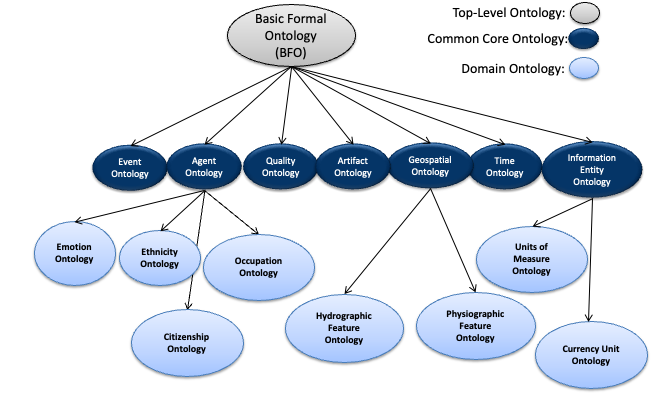
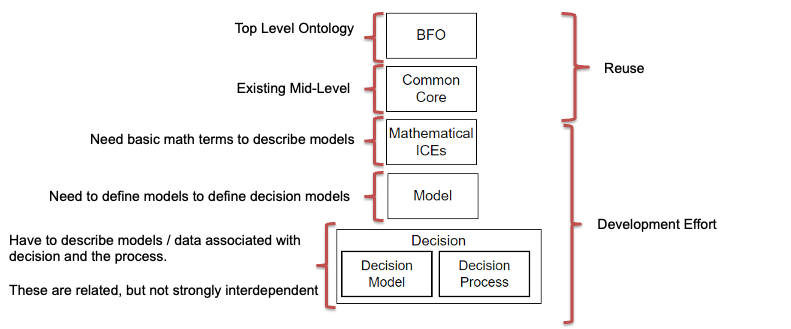
BFO (Basic Formal Ontology) is a top-level ontology (TLO) that serves as the foundation for many science and engineering domain ontologies. It establishes a simple, consistent taxonomy of high-level classes that describe the basic structure of reality, enabling interoperability across different domains.
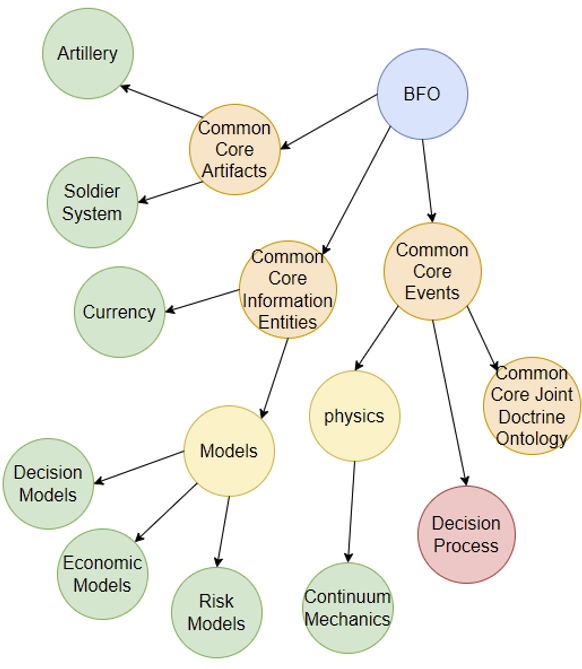
BFO’s key characteristics: - Simple taxonomy with single inheritance paths - Organizes reality into two main perspectives: Continuants (things that persist through time) and Occurrents (things that happen over time) - Based on ontological realism (terms correspond to universals that exist in reality) - Used as the foundation for the IoIF (Armaments Interoperability and Integration Framework) ontology ecosystem
| BFO’s single inheritance principle is critical for ensuring predictable behavior in automated reasoning and query answering. |
Position in Knowledge Hierarchy
Broader concepts: - Part III (is-a)
Details
BFO’s Taxonomy Structure
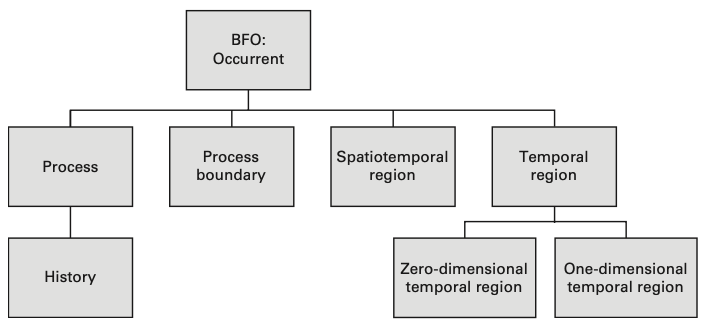
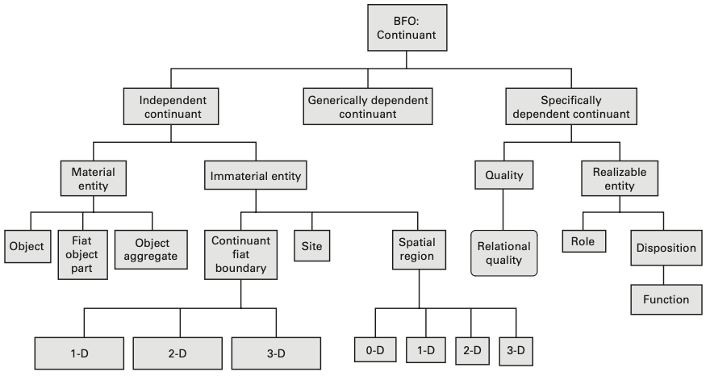
BFO organizes reality into two fundamental perspectives:
| Perspective | Description |
|---|---|
Continuants |
Things that persist through time (e.g., objects, properties, regions) |
Occurrents |
Things that happen over time (e.g., processes, events, actions) |
Continuants are further divided into: - Independent continuants: Things that exist without reference to other entities (e.g., items, spaces) - Specifically dependent continuants: Things that depend on other entities (e.g., roles, dispositions, qualities) - Generically dependent continuants: Things that depend on other entities but can be copied (e.g., information)
Occurrents are divided into: - Processes: Events or actions that happen (e.g., history of a place, life of a person) - Temporal regions: Boundaries of things that happen (e.g., instants, spans of time)
| BFO’s taxonomy is designed to be simple with single inheritance paths to prevent complex interactions between axioms. |
BFO’s Pragmatic Principles
BFO follows several pragmatic principles to guide ontology development:
| Principle | Description |
|---|---|
Use and reuse of reference ontologies |
Leverage existing ontologies rather than creating new ones from scratch |
Consistency with established science |
Ensure alignment with scientific understanding |
Consistency with existing reference ontologies |
Maintain compatibility with the broader ontology ecosystem |
Single inheritance of terms |
Prevent complex interactions between axioms |
Aristotelian definitions |
Define terms as a parent class with distinguishing features |
Instantiation |
All classes are things that can have instances |
| BFO’s commitment to ontological realism means it views terms as corresponding to universals that exist in reality, not just as labels or constructs. |
BFO Graph Patterns
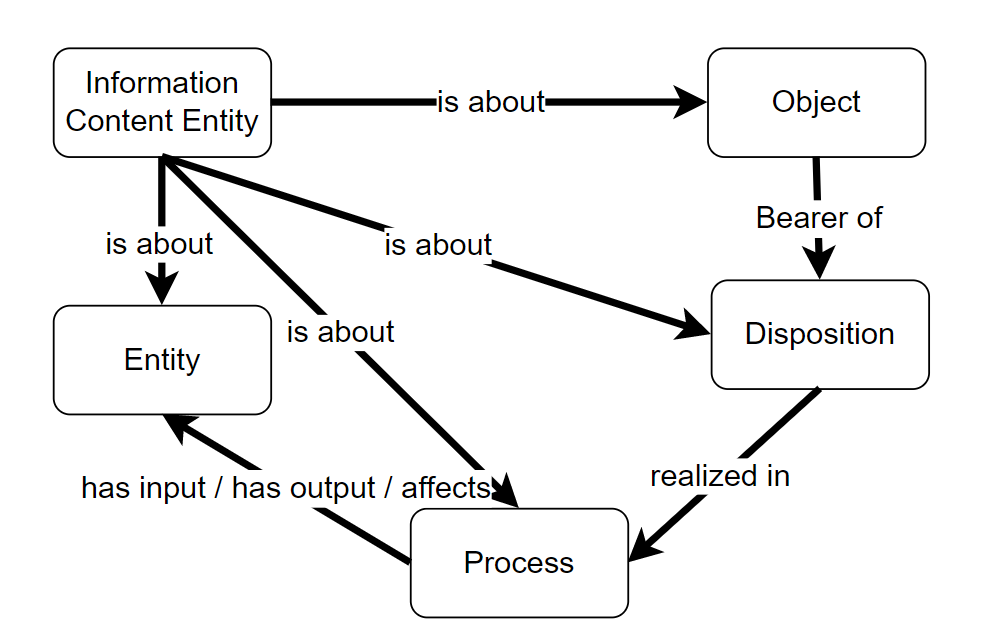
BFO defines no object property relations in its canonical release and is instead meant to be combined with the Relations Ontology (ro.owl). Together, these define a relatively small set of graph patterns that can be refined and extended to develop subsequent ontologies.
The most common graph patterns include: - Independent continuants related to specifically dependent continuants - Specifically dependent continuants inhering in their bearers
Associated Diagrams